


加拿大鹅静安嘉里中心限时快闪店
 作者: Winniekong
 代理商:
不确定
项目信息
项目品牌: Canada Goose 加拿大鹅
项目行业: 服装及鞋履
项目日期:
 2026-10-01 10:00
2026-10-31 22:00
项目地点: 上海 静安嘉里中心
项目名称: 加拿大鹅静安嘉里中心限时快闪店
加拿大鹅静安嘉里中心限时快闪店
2026年10月01日-2026年10月31日
上海 静安嘉里中心
项目传播

项目现场


加拿大鹅在静安嘉里中心北区中庭落下的这个限时空间,表面上是一次“2.0零售概念”的展示,实质上是一次被精心包装过的市场探测。项目背景的张力在于:大中华区正在成为加拿大鹅唯一的增长引擎——2027财年一季度大中华区营收同比大涨44.2%,全球占比升至31.5%,而北美市场同期却在失温,美国市场下滑16.1%,贝恩资本考虑出售全部持股的传闻始终未散。在“卖身”阴云与北美失守的双重压力下,把一座快闪店放进南京西路,既是对中国市场“仍然重要”的公开表态,也是一种比开大店灵活得多的试水——搜狐的文章说得直接:快闪是“低成本试探核心商圈”,费的是巧思,靠的是节奏,而不是一味求大。
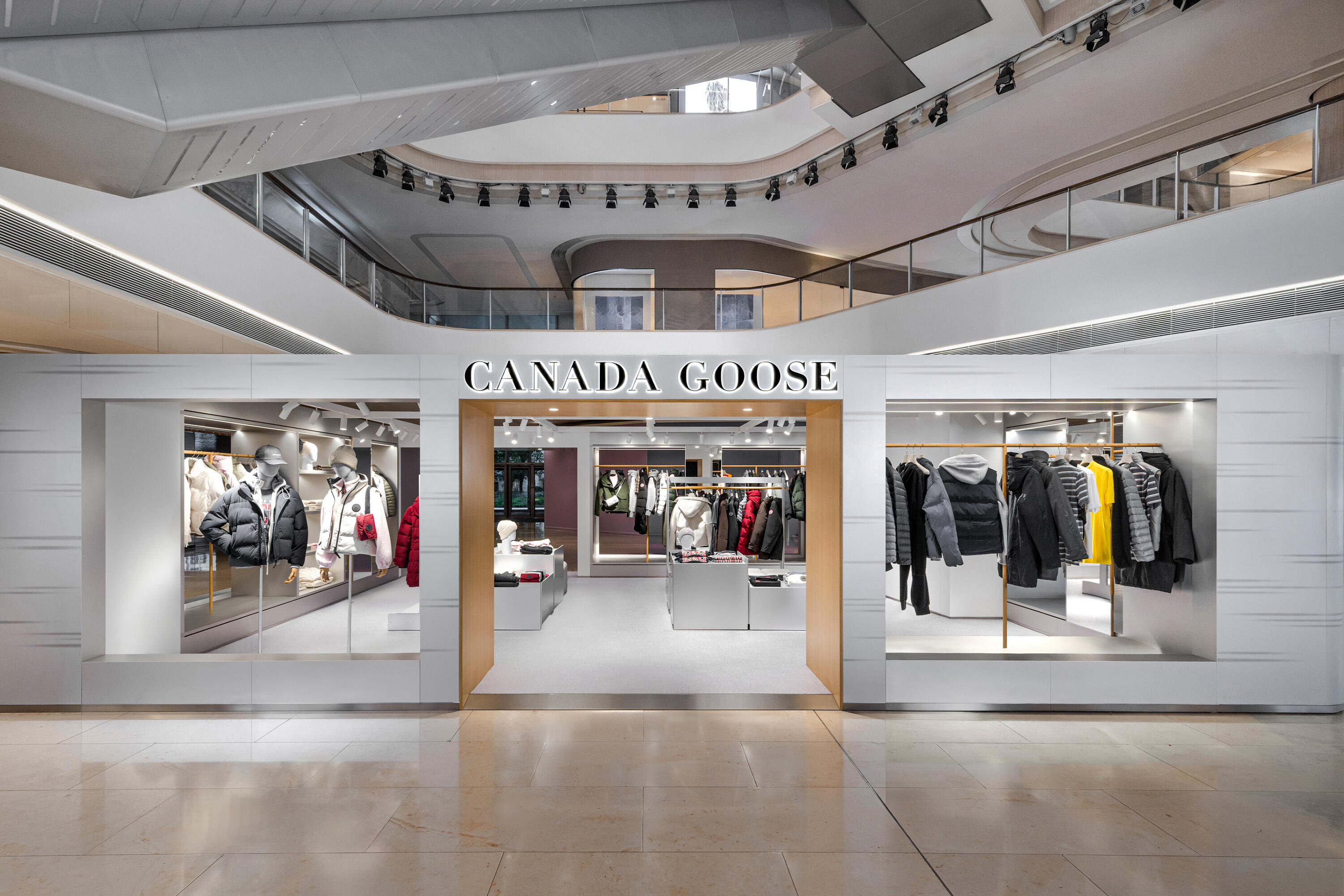
空间与造型的选择因此值得细读。拉丝金属立面与温润橡木并置,开放动线引导穿行,自然色调与柔和光影制造出一种“温暖而富有层次”的沉浸感。这套语言在功能上服务于“2.0零售概念”的叙事,但在解读层面,它更像一次精密的软化处理:金属是加拿大鹅的功能底色——Arctic Tech面料的耐用、防泼水、极寒防护——橡木则负责把它翻译成可亲近的都市日常。快闪店没有复刻北境的严酷,而是把“自然”收编为室内的一种材质情绪,让一个以“抵御恶劣环境”起家的品牌,在上海的初秋里显得毫不突兀。
制作与产品角度揭示了这场空间真正要推销的东西。2026秋冬“自然本能”系列由Haider Ackermann操刀,官方措辞是“品牌迄今最丰富的新品阵容”。但“丰富”的真正指向是品类结构:上海首发的Beckley条纹Polo、Rupert与Tofino防雨夹克、Tayen抓绒夹克,连同Erie派克大衣和羽绒系列,构成了一条从春夏季单品到深冬装备的完整梯度。非羽绒品类在上一季度已贡献近40%的总营收,体量超过了品牌2019财年一季度的全部收入。快闪店的产品选择不是随机陈列,而是一次有意识的信号释放:加拿大鹅要卖的不再只是“最冷的时候穿的那一件”,而是从初秋到深冬的每一个都市场景。
传播与活动内容的关系则呈现出一种值得注意的克制。公开可见的传播几乎完全由品牌官方渠道驱动——开幕稿、微博预告、空间美图——没有制造明星到场或社交话题事件。这与许多奢侈品牌快闪店“传播先行、话题开路”的逻辑不同。这种克制本身可以被读作策略的一部分:当品牌正处于“去羽绒化”转型的可信度建设期,过度喧哗反而会稀释产品信号。让空间本身成为内容——橡木的质感、金属的冷峻、首发的稀缺——比让KOL在店里摆拍更能回应一个核心问题:加拿大鹅的非羽绒单品,是否配得上它羽绒服曾经建立的价格预期。快闪店在传播上的“轻”,恰恰是为了让产品体验的“重”不被遮蔽。
项目意义最终落在一个悖论上。加拿大鹅需要“自然本能”这个主题来为品类扩张赋予合法性:如果品牌的本能是适应环境,那么从极寒到都市、从羽绒到抓绒与防雨夹克,就是本能的延伸,而非背离。但快闪店的空间语言——橡木的温润、光线的柔和、动线的流畅——又在不遗余力地把这种“适应”包装成一种从容的、无需言说的自然演进,而不是一次被财报压力驱动的战略调整。静安嘉里中心的这间限时空间,本质上是一座用材质和光影搭建起来的缓冲带:它让品牌在核心商圈里以最小的风险测试新一代客群的反应,同时让“转型”这件事,看起来像是品牌本来就该走的路。
Canada Goose at Jing’an Kerry Centre: A “Risk-Control Room” Wrapped in Oak and Metal On the surface, Canada Goose’s pop-up in the Jing’an Kerry Centre atrium is a showcase for a “2.0 retail concept.” Beneath that surface, it is a carefully packaged market probe. The tension in the background is hard to miss: Greater China has become the brand’s only reliable growth engine, with Q1 FY2027 revenue up 44.2% year-on-year and its global share rising to 31.5%, while North America is cooling—the U.S. market fell 16.1%—and Bain Capital’s exploration of a full stake sale continues to cast a shadow.
Under that double pressure, placing a pop-up on Nanjing West Road is at once a public statement that China still matters and a far more flexible trial than opening a permanent large-format store. As one reading puts it, the pop-up is “a low-cost test of the core commercial district,” relying on timing and nimbleness rather than sheer scale. The spatial language deserves close reading. Brushed metal facades sit against warm oak, open circulation guides movement, and natural tones with soft lighting produce a layered sense of immersion.
Functionally, this serves the “2.0” narrative. Interpretively, it performs a softening operation: metal carries Canada Goose’s functional identity—durable, weatherproof, built for extreme cold—while oak translates that identity into something approachable and urban. The pop-up does not recreate the severity of the North; it absorbs “nature” into an interior mood, allowing a brand founded on resisting hostile environments to feel entirely at home in a Shanghai autumn. The product dimension reveals what the space is actually selling.
The Fall/Winter 2026 “Second Nature” collection, designed by Haider Ackermann, is billed as the brand’s “most extensive lineup to date”. But the real signal is categorical: Shanghai-exclusive launches such as the Beckley striped Polo, the Rupert and Tofino rain jackets, and the Tayen fleece, alongside the Erie parka and down pieces, form a gradient from early-autumn lighter layers to deep-winter insulation. Non-down categories already contributed nearly 40% of total revenue in the prior quarter, exceeding the brand’s entire Q1 FY2019 revenue. The selection is not arbitrary; it is a deliberate emission: Canada Goose no longer wants to be only “the one you wear when it is coldest.” The relationship between content and communication is notably restrained.
Public-facing messaging is driven almost entirely by official channels—launch notes, Weibo previews, spatial imagery—without a celebrity appearance or engineered social moment. This restraint can be read as strategy. While the brand is still building credibility for its de-downization transition, excess noise would dilute the product signal. Letting the space itself become the content—oak texture, metal coolness, launch exclusivity—addresses the question that matters: whether Canada Goose’s non-down pieces can justify the price expectation its parkas once established. The lightness of the communication is there to protect the weight of the product experience. The project’s ultimate meaning sits in a paradox.
Canada Goose needs “Second Nature” to legitimize category expansion: if the brand’s instinct is to adapt to environments, then moving from extreme cold to the city, from down to fleece and rain shells, is an extension of that instinct rather than a departure from it. Yet the spatial language—warm oak, soft light, fluid circulation—works to present that adaptation as a natural, unhurried evolution, not a strategic correction driven by financial pressure. The Jing’an pop-up is, at bottom, a buffer zone built from materials and light: it lets the brand test a new consumer cohort in a prime district at minimal risk, while making the act of transformation look like the road the brand was always going to take.
-end-
图片及内容来自网络及品牌公开信息,出处见网络
文字来自 AI 编辑完成,AI信息自我辨识
 x

