


ECCO「自然有动线」上海新天地限时空间(上海)
 作者: editor01
 代理商:
不确定
项目信息
项目品牌: ECCO 爱步
项目行业: 服装及鞋履
项目日期:
 2026-10-29 10:00
2026-11-22 22:00
项目地点: 上海 新天地
项目名称: ECCO「自然有动线」主题限时空间
品牌:ECCO 爱步|项目:ECCO「自然有动线」主题限时空间(BIOM 秋冬成衣系列)|时间:快闪 2026.10.29—11.03;慢闪 2026.10.29—11.22|地点:上海市黄浦区 上海新天地
鞋品牌做成衣,难的从来不是设计,是让人相信它懂身体。ECCO 是丹麦的鞋履与服饰品牌,BIOM 是它做了十七年的一条健步线,2009 年初代上市,讲的是让鞋顺从双脚的自然动作。这条线卖的不是造型,是脚感,而脚感恰恰是屏幕和参数表交代不了的。2026 年秋冬,BIOM 把同一套人体工学逻辑从脚上延到身上,推出成衣系列,并在上海新天地开出 ECCO「自然有动线」主题限时空间(BIOM 秋冬成衣系列)。时间卡在双 11 之前:与其在详情页里解释剪裁,不如让人把衣服和鞋一起穿上,走两步。
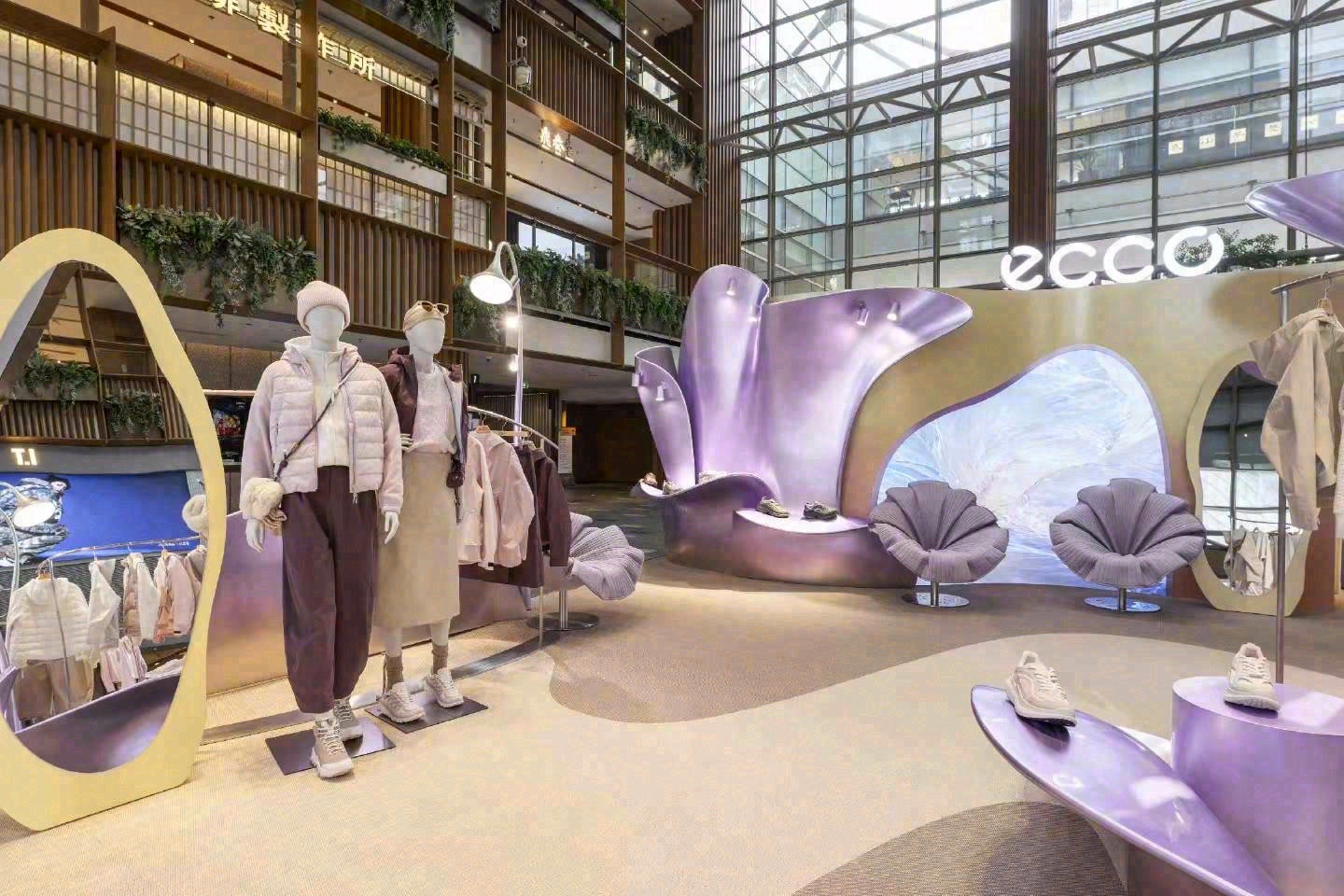
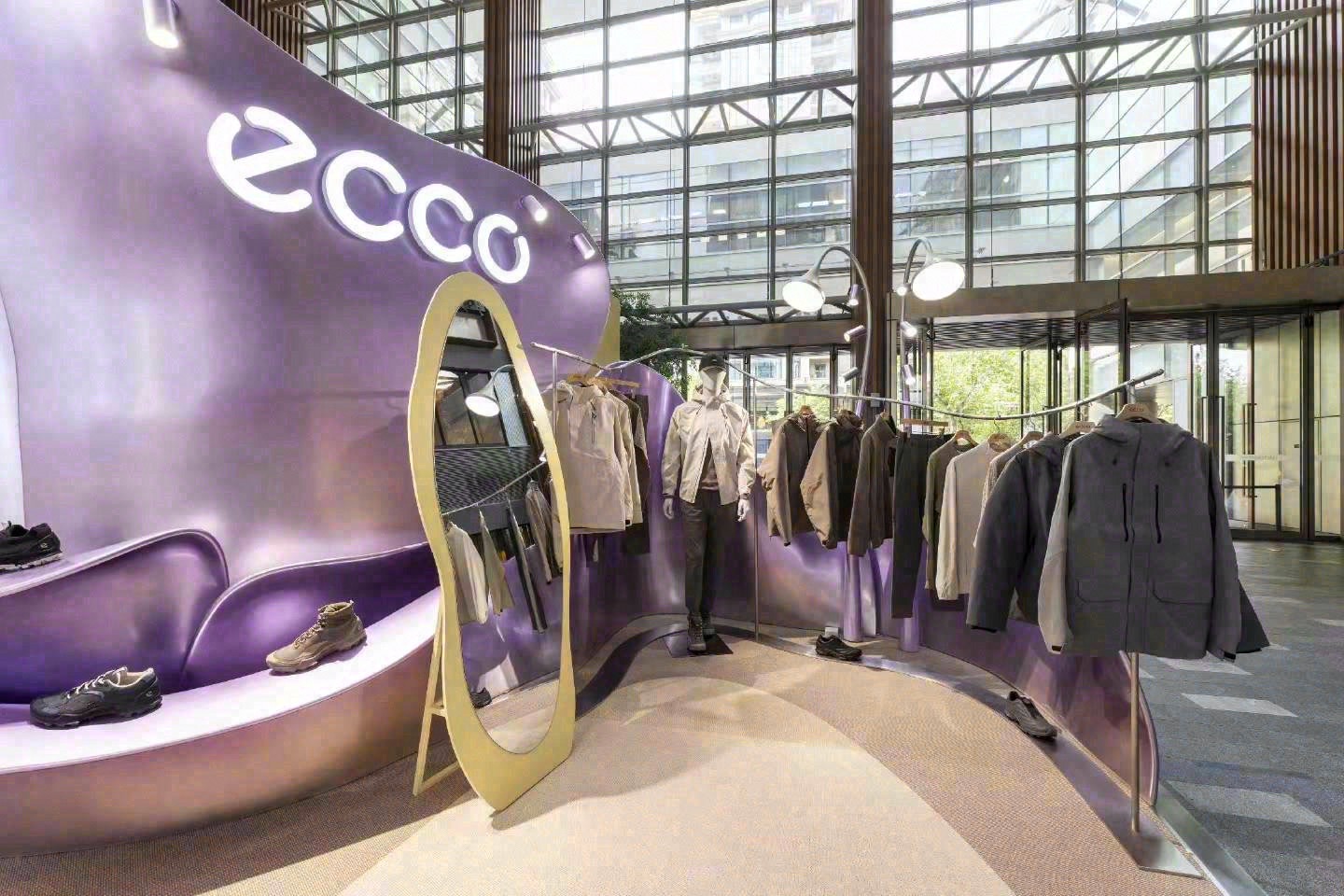
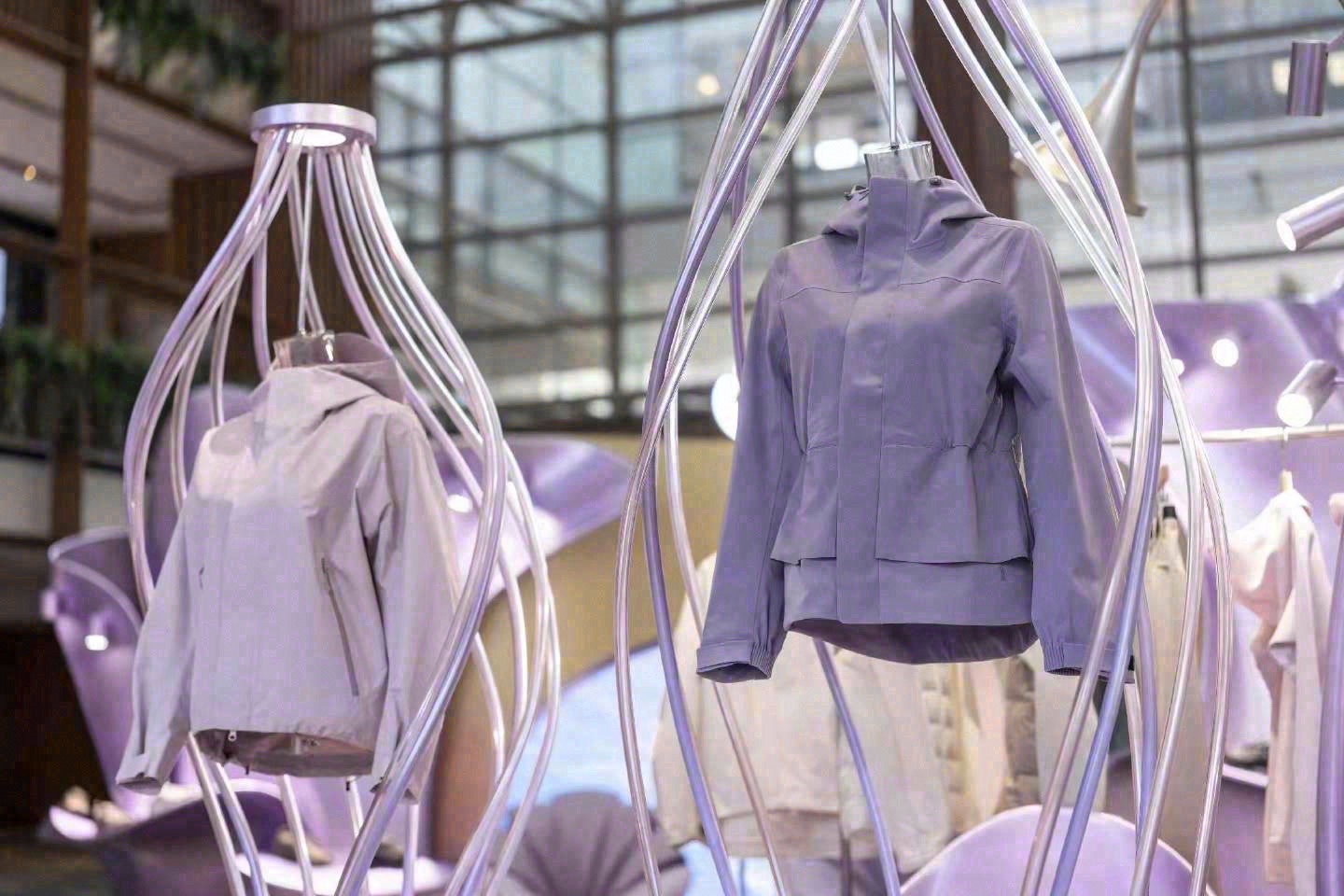
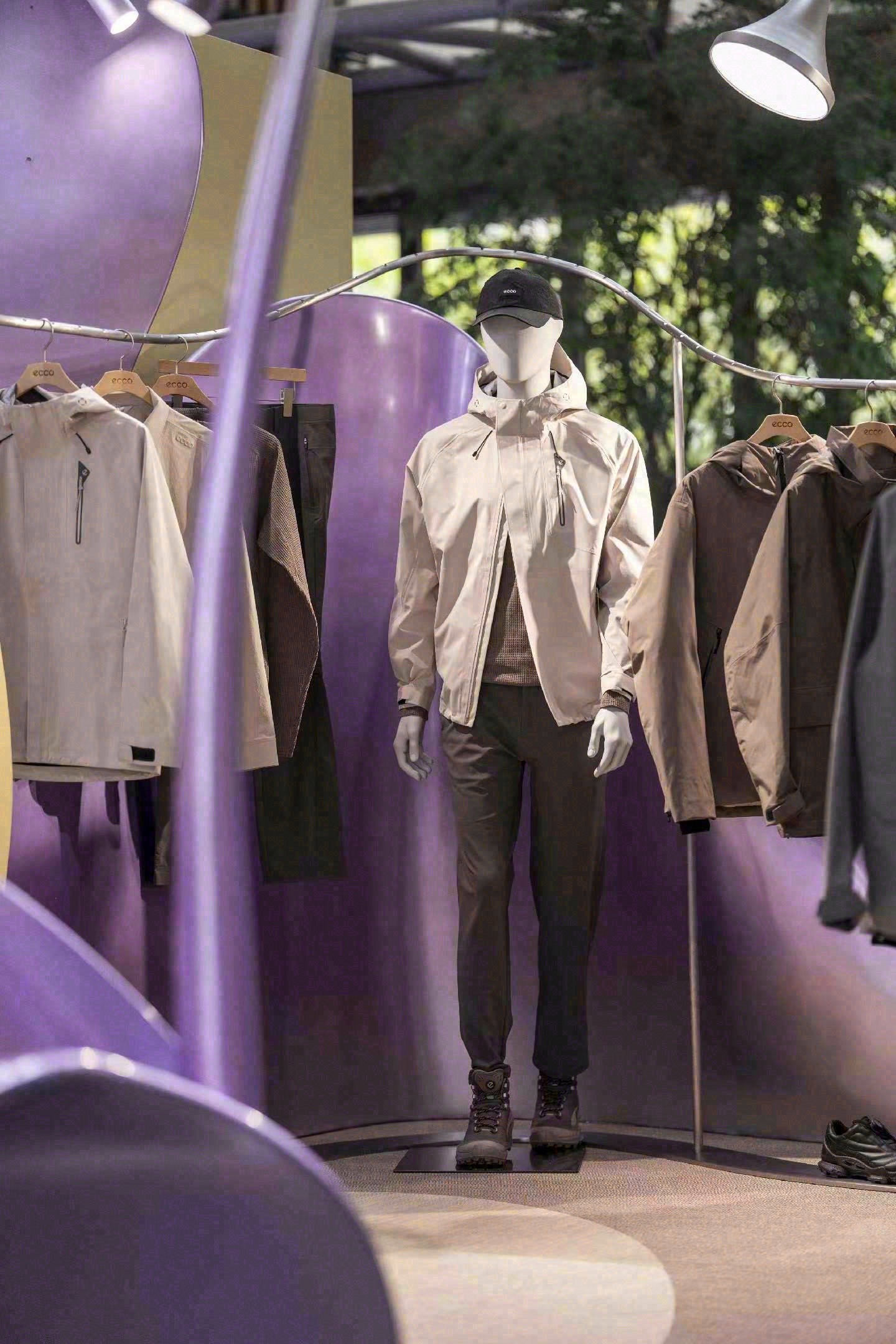
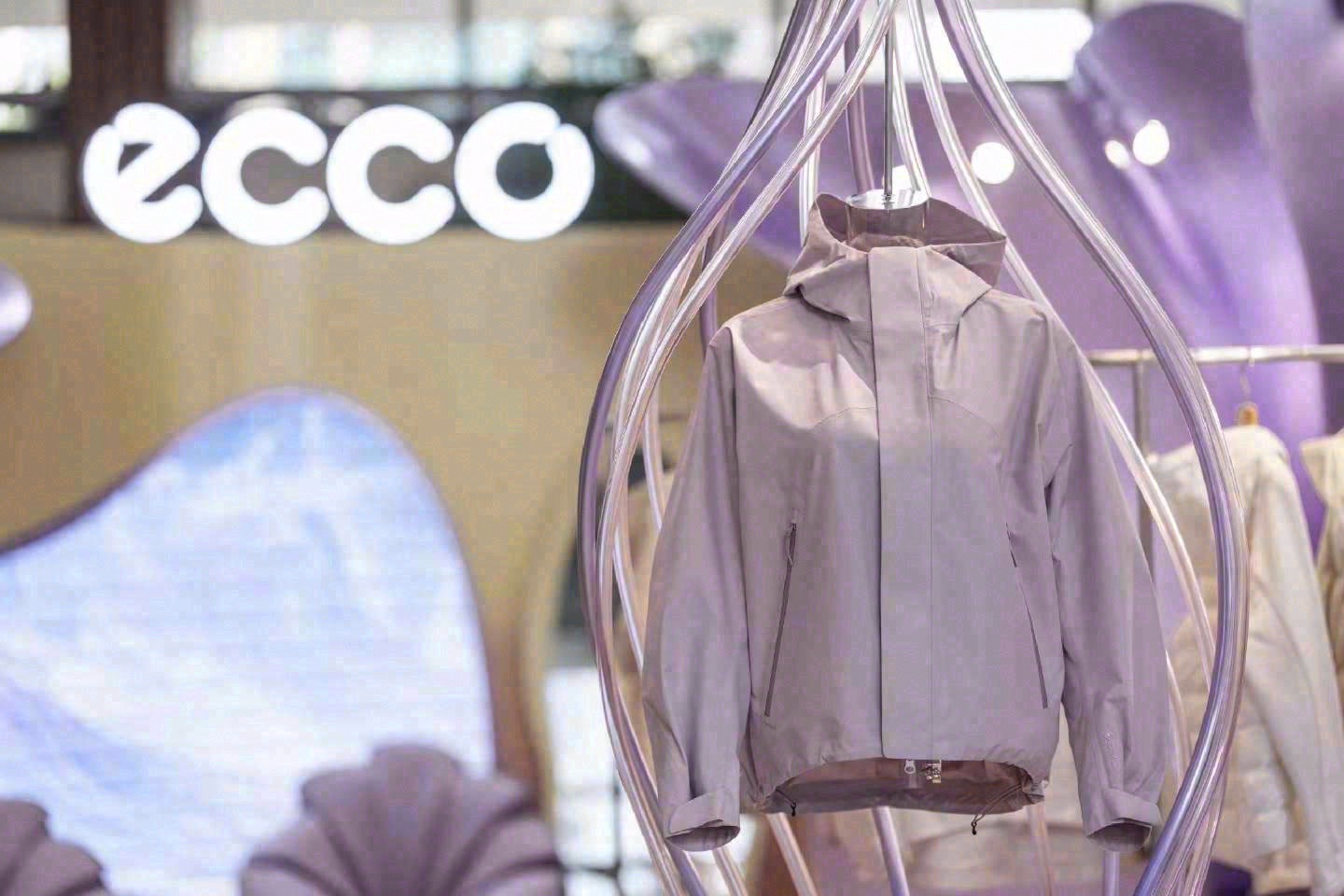
走进空间,先被颜色接住:蓝紫渐变压在金属质感上,如水般延伸的曲线从地面起身、向内收拢,远看是一尾鱼摆尾的瞬间。装置以「自在鱼游」为意象,花瓣与水滴状的曲面围合出场地,中央留一道拱形门洞;水滴形金属挂架从曲面上伸出挂成衣;低矮地台分区摆鞋;花瓣形吊灯悬在上方,几组沙发散在场内。中心是巨型鱼尾装置与水滴造型,把视线收住。
装置说的其实是产品那句台词。女款「鱼游软壳外套」用多层下摆做出荷叶边,衣摆一动就是鱼尾的流动感;男款「驭风外套」把户外面料收进日常轮廓;两款都配 BIOM 鞋履,鞋服同场试穿。曲线、分割线、荷叶边在装置上是造型,在衣服上是版型,同一套语言换了个尺度。
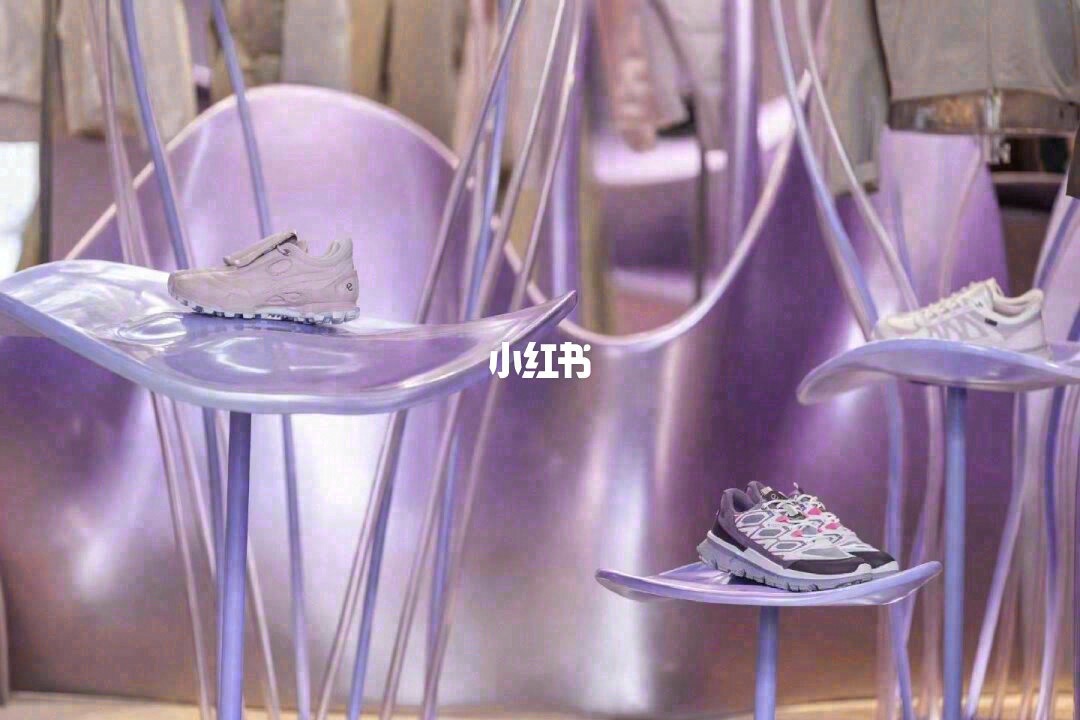
这里不是展,是一间没有墙的更衣室。场地是开敞的,四面可进,只用一道拱门给出方向。空间开在街区动线上:路过的人不必先决定「要不要看展」,走进拱门就在场内。三面墙各领一件事:品牌历史墙从 1963 年讲起,摊开工艺与科技的家底;BIOM 展示墙讲动态剪裁与人体工学;明星合影装置让人停下来、举起手机、带走一张图。动线短而顺:先看墙,再在挂杆前挑衣服,往低处取鞋,坐下试穿。挂杆对应挑款,地台对应取鞋,沙发对应试穿,每个动作都有家具接住。陈列密度刻意压低,鞋与鞋之间留出距离,人才有地方站、蹲下去摸鞋面。一套可以穿上身照镜子:来买鞋的顺手看了衣服,来买衣服的顺手试了鞋。
六天做声量,三周做转化,这是两件不同的活。10 月 29 日空间对外开放,10 月 30 日举行启幕仪式,品牌全线代言人黄景瑜到场,同场还有 ECCO 大中华区总经理董江白、瑞安新天地高级商业总监 Clarence Lee 李振辉、瑞安新天地总经理 Mickey Tao 陶然。四人共同启动装置,水滴汇入涟漪,灯光亮起。品牌方与业主方高层同台,说明这不只是品牌快闪,也是新天地的动作。快闪空间 10 月 29 日到 11 月 3 日,六天,把镜头和人群聚过来;慢闪空间 10 月 29 日到 11 月 22 日,三周,把看过的人引到店里。六天加三周,正好覆盖双 11 的决策窗口。这类空间不承担成交,承担的是让一双鞋、一件外套先被穿上身,在双 11 之前,试穿本身就是决策的一半。
A shoe brand moving into apparel does not have a design problem. It has a credibility problem: the customer who already trusts it underfoot has no reason yet to trust it across the shoulders. ECCO is a Danish footwear and apparel company, and BIOM is the walking line it has been building since the first generation launched in 2009. The proposition was never about how a shoe looks on a shelf; it is about how it behaves under a moving foot, which is exactly what a product page cannot demonstrate. In autumn 2026 the brand carried that logic from the foot to the body with a BIOM ready-to-wear collection, and built a temporary space for it in Shanghai Xintiandi under the title "Nature Has Its Own Line of Motion." Timing is part of the design. The space opened on 29 October, and the pop-up closes on 3 November, in the run-up to Double 11, the November shopping festival that decides a large share of the year for footwear brands in China. Rather than explaining cut and fabric inside a listing page, the brand asks visitors to put on the jacket and the shoes and walk a few steps.
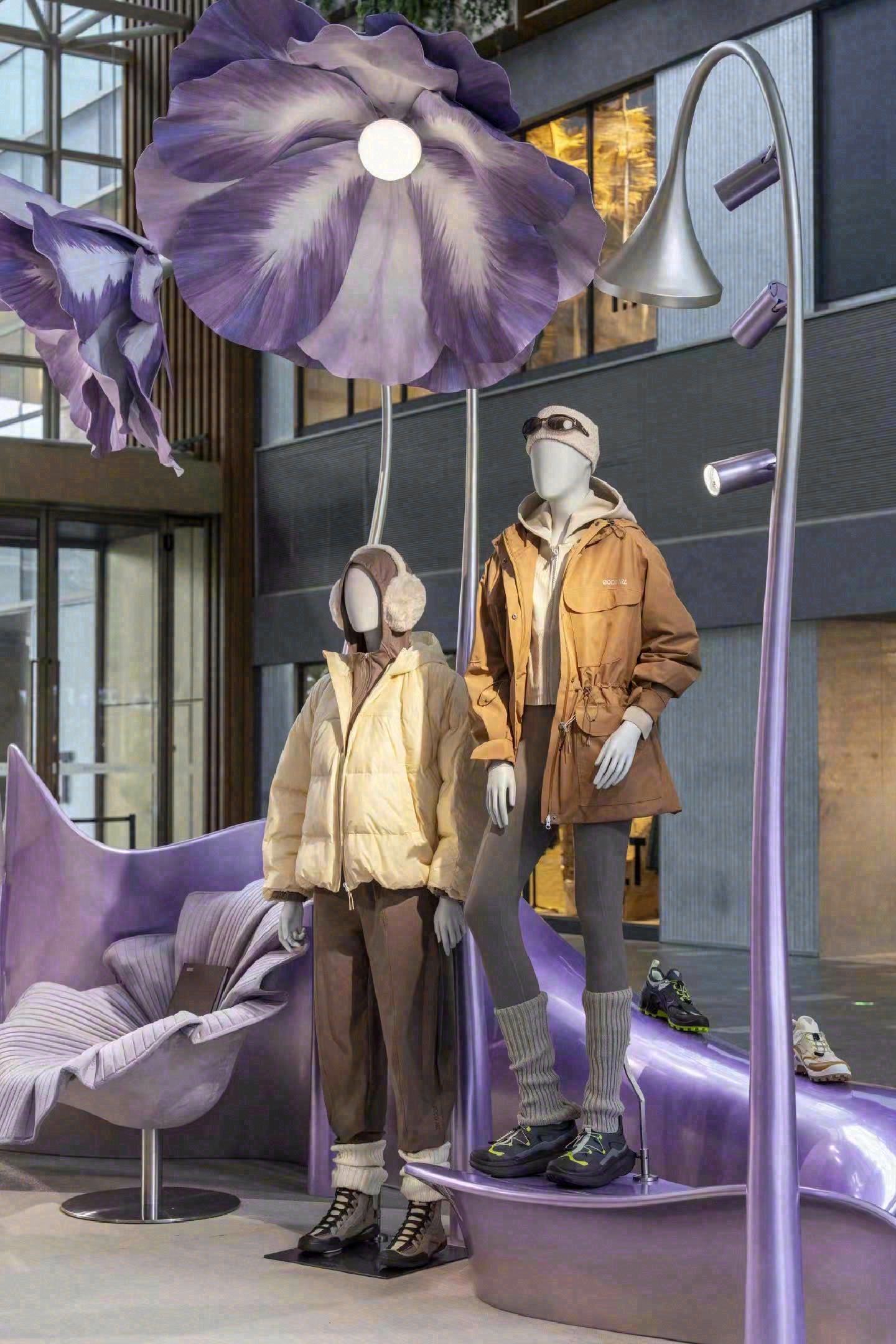
The installation is the hem of the jacket at room scale. Its image is a fish swimming at ease: light sits under a blue-to-purple gradient laid over metal, and curves extend like water. Petal- and droplet-shaped surfaces lift off the floor and close inward, leaving an arched opening as the entrance. Droplet-shaped metal rails grow out of the curved walls to carry the seasonal apparel, low platforms break the floor into shoe displays, petal-shaped pendant lights hang above, and single sofas sit among the fixtures. At the center, a large fish-tail piece and a droplet form hold the sight line.
The link to the product is literal. The women's softshell jacket in the collection is cut with a layered hem that forms a ruffled edge, so the garment moves like a tail when the wearer walks. The men's shell takes outdoor fabric and keeps the silhouette urban. Both are shown with BIOM footwear, and shoes and clothes are tried on in the same room. Curve, seam and ruffle work as shape in the installation and as pattern in the garment: one language at two scales. A visitor standing in the middle is, in effect, standing inside a detail.
This is not an exhibition. It is a fitting room without walls. The site is open on every side, and the design does not try to seal it; a single arch sets a front door and a direction. Because the space sits on a street-block route rather than behind a ticket desk, nobody has to decide to visit an exhibition, and stepping through the arch is enough to be inside. Three walls carry three jobs: a brand history wall that begins in 1963 and lays out craft and technology; a BIOM wall on this season's ergonomic cut; and a photo installation that gives visitors a reason to stop, raise a phone and leave with an image.
The route is short: look at the walls, browse the rails, step down to the platforms, pick up a pair, sit, try it on. Each action has furniture attached to it, with rails for browsing, platforms for picking and sofas for trying, so the sequence needs no signage. Display density is kept low, with gaps between shoes, which leaves room to stand, kneel and handle an upper. Apparel and footwear share one room, so a visitor can put on a whole look and check it in a mirror: someone who came for shoes sees a jacket, and someone who came for a jacket tries a pair of shoes.
Six days are for noise; three weeks are for conversion. The space opened to the public on 29 October, and the opening ceremony was held on 30 October, when brand ambassador Huang Jingyu appeared with ECCO Greater China general manager Dong Jiangbai, Shui On Xintiandi senior commercial director Clarence Lee and Shui On Xintiandi general manager Mickey Tao. The four started the installation together, a droplet fell into a ripple, and the lights came up. Senior people from both the brand and the landlord sharing a stage is a signal: this is a joint move between ECCO and Xintiandi, not a brand renting a patch of pavement for a week.
The pop-up runs six days, from 29 October to 3 November, and its job is to gather cameras and crowds. The slower format runs from 29 October to 22 November, three weeks, and its job is to move people who have already seen the space into stores. Six days plus three weeks covers the Double 11 decision window almost exactly. A space like this does not close sales; it gets a shoe and a jacket onto a body before the sale starts, which, for a line whose argument is how it feels to walk, is half the decision already made.
-end-
图片及内容来自网络及品牌公开信息,出处见网络
文字来自 AI 编辑完成,AI信息自我辨识
 x

